

Fintech App Development -Over the years, leading software engineering teams in the ever-evolving Fintech space has taught me one priceless lesson: if your product doesn’t connect with the person using it — emotionally, intuitively, and intelligently — it doesn’t matter how “cutting-edge” your tech is. People won’t stay.

That’s where Design Thinking came in and completely reshaped how I approach everything — from product ideation to team brainstorming, from building MVPs to scaling platforms for millions. It’s not just a framework or buzzword in my world; it’s a mindset shift. A shift from building features to crafting experiences. From solving requirements to solving real human problems. You see, in Fintech, we’re not just pushing buttons and pushing code — we’re dealing with people’s money, their trust, their hopes of financial freedom, their dreams of sending a child to school, or retiring with dignity. When we step into that mindset, Design Thinking becomes more than just UX-friendly — it becomes business-critical.
I’ve seen firsthand how powerful it is when cross-functional teams — engineering, product, design, compliance, even finance — come together with empathy and curiosity. Suddenly, that tiny “forgot password” flow becomes a moment of reassurance. That biometric login isn’t just secure — it feels like magic. That payment screen? It turns from a transaction into a tiny celebration.
When you design for people, not personas, and solve for needs rather than specs, something beautiful happens — users engage more, businesses grow, tech becomes invisible, and the quality of experience (QoE) becomes your true KPI.
For me, it’s always been about building digital journeys that feel like they were made for you, not just by us. Because when you blend technology, business strategy, user empathy, and commercial outcomes — you don’t just build apps, you create impact. And that, in a nutshell, is how Design Thinking helped me become not just an engineer or leader — but a 360-degree Fintech Grand Master. (Still waiting on the cape, though.)
Fintech App – As We Know
In my personal experience the development of Fintech mobile app always stands out at the intersection of innovation, security, and user experience. Fintech, a fusion of financial services and cutting-edge technology, has revolutionized the way individuals and businesses manage their finances.

However, with this innovation comes the critical responsibility of safeguarding sensitive financial data against evolving cyber threats. The development of Fintech applications demands a delicate balance between
- Innovation
- Security
- User experience.
Innovative Fintech developers continuously push the boundaries of technology to introduce groundbreaking features and functionalities. Whether it’s streamlining payment processes, offering personalized investment solutions, or facilitating peer-to-peer lending, Fintech applications strive to provide users with innovative tools to enhance their financial lives.
In short, successful Fintech app development requires a holistic approach that balances innovation, security, and user experience. By harmonizing these key elements, Fintech developers can create compelling and transformative solutions that empower users to achieve their financial goals with confidence and convenience. This drive for innovation fuels the rapid evolution of Fintech, driving the industry forward and opening up new opportunities for financial inclusion and empowerment.
Fintech App Development – Outlook
In the dynamic landscape of financial technology, Fintech App Development stands at the intersection of innovation, security, and user experience. Design Thinking emerges as a guiding philosophy, weaving empathy and collaboration into the fabric of crafting solutions.

This journey delves into the pivotal role of user-centric design, aligning technology with the financial aspirations of users.

It’s a commitment to building solutions that resonate with users. The empathy-driven approach, collaborative ideation, and iterative improvement create a framework where technology seamlessly aligns with the financial needs of users.
- Revolutionizing Finance: Fintech app development marks a transformative shift in the financial landscape, leveraging technology to enhance traditional banking services, streamline transactions, and improve overall financial experiences for users.
- Innovation and Accessibility: Fintech apps bring innovation to financial services by introducing user-friendly interfaces, personalized experiences, and cutting-edge technologies such as AI and blockchain. These apps aim to make financial services more accessible to a broader audience, empowering users to manage their money conveniently.
- Evolving Industry Dynamics: The emergence of fintech apps has disrupted traditional financial models, fostering increased competition, efficiency, and responsiveness to customer needs. This evolution is reshaping the way individuals and businesses interact with financial services, paving the way for a more dynamic and inclusive financial ecosystem.
In addition to innovation and security, user experience plays a pivotal role in the success of Fintech applications.
- In today’s digital age, users expect seamless and intuitive experiences across all their interactions with technology.
- Fintech developers recognize the importance of delivering user-centric designs that prioritize simplicity, clarity, and accessibility.
From intuitive navigation flows to responsive interfaces, every aspect of the user experience is carefully crafted to ensure ease of use and engagement.
Understanding Design Thinking in Fintech
In fintech, mobile applications with design thinking have emerged as a transformative force. This human-centric approach places users at the core of fintech development, blending innovation, empathy, and functionality to create solutions that resonate deeply.

The intricacies of design thinking in fintech transcend traditional boundaries and foster a new era of user-centric financial experiences.

- User-Centric Solutions Driven by Empathy: In Design Thinking, the foundation lies in empathy, a profound understanding of users and their financial journeys. In Fintech, prioritizing trust and security, empathetic design ensures that every feature resonates with users, addressing their pain points and delivering seamless solutions.
- Cross-Functional Collaboration for Ideation: The essence of Design Thinking thrives on bringing diverse teams together. In Fintech app development, collaboration among designers, developers, product owners, infosec experts, technical professionals, and financial experts cultivates an environment where varied perspectives contribute to creative ideation. This collaborative effort results in innovative features that authentically cater to users’ financial needs.
- Prototyping for Continuous Improvement: Prototyping stands as a pivotal phase where Fintech app ideas materialize. Rapid prototyping facilitates swift feedback loops, allowing for iterative improvements based on user insights. This approach ensures that the final product closely aligns with user expectations through a process of continual refinement.
- User Testing for Real-World Validation: Design Thinking incorporates user testing as a crucial step in the Fintech app development journey. Real-world validation through user testing provides invaluable insights into user experiences, preferences, and potential challenges, guiding further refinements for an optimized and user-friendly app.
- Iterative Design Process for Adaptability: Design Thinking’s iterative nature seamlessly aligns with Fintech app development. The continuous cycle of ideation, prototyping, testing, and refinement ensures an adaptable design process. This iterative approach allows Fintech apps to evolve in response to user feedback and changing financial landscapes, ultimately delivering solutions that stand the test of time.
Design Thinking is not merely a methodology but a paradigm shift in how Fintech solutions are conceptualized and executed. By embracing empathy, iterative prototyping, and collaboration, Design Thinking in Fintech has the power to redefine the user experience, foster innovation, and cultivate financial tools that genuinely address the needs and aspirations of users.
As we navigate this dynamic landscape, understanding and integrating Design Thinking principles becomes imperative for those shaping the future of Fintech.
Fintech App Development – Innovation
Fintech app development has become critical for innovation, changing the way we engage with financial services. In this digital era, these applications harness cutting-edge technologies to introduce unprecedented convenience, accessibility, and efficiency to the world of finance.

- Blockchain Integration: Fintech apps leverage blockchain technology to ensure secure and transparent transactions, eliminating the need for intermediaries and reducing fraud risks.
- AI-Powered Personalization: The integration of Artificial Intelligence (AI) enables fintech apps to provide personalized financial insights, investment recommendations, and tailored user experiences based on individual preferences and behaviors.
- Mobile Wallet Advancements: Fintech apps continue to enhance mobile wallet functionalities, allowing users to make seamless, contactless payments, manage diverse currencies, and track expenditures in real-time.
- Robo-Advisors for Investment: Innovative robo-advisors within fintech apps automate investment processes, offering users algorithm-driven, personalized investment strategies based on their financial goals, risk tolerance, and market conditions.
- Open Banking Ecosystem: Fintech apps embrace open banking, fostering collaboration with various financial institutions. This interconnected approach allows users to access a broader range of financial services and facilitates the development of holistic financial management solutions.
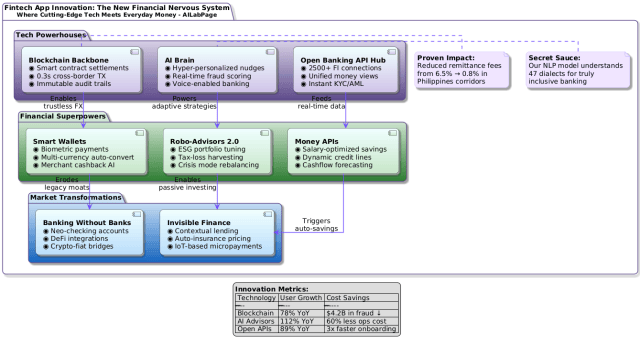
Fintech app development stands at the forefront of financial innovation, continuously pushing boundaries and reshaping the industry landscape. With its commitment to technological advancements, user-centric design, and seamless integration of financial services, these apps are not just tools; they are enablers of a more accessible, personalized, and efficient financial future.
Elevating User Experience in Fintech
In financial technology, the role of mobile apps has become pivotal in shaping user experiences. As consumers increasingly rely on mobile devices for their financial transactions, elevating the user experience in Fintech apps has become a crucial aspect. This journey into the integration of mobile apps in Fintech aims to explore the strategies and innovations that contribute to a seamless and user-centric financial ecosystem.

- Seamless Onboarding: The Fintech app welcomes users with a smooth onboarding experience, merging robust security measures with user-friendly interfaces. This initial interaction not only ensures data safety but also fosters trust, laying a strong foundation for an enriching user journey.
- Personalization for Financial Wellness: Elevating financial well-being is at the heart of our Fintech app. Powered by advanced AI and machine learning, personalized features offer tailored insights, budgeting tips, and investment recommendations. This customization empowers users to make informed financial decisions aligned with their unique goals.
- Intuitive Navigation and Accessibility: Designed with clarity and simplicity, our Fintech app prioritizes intuitive navigation. Users effortlessly discover and utilize features, promoting a seamless experience. Committed to inclusivity, the app ensures accessibility, catering to users with diverse needs and fostering an environment where everyone can thrive.
- Real-time Alerts and Notifications: Stay connected with your finances through our real-time alert system. Instant notifications provide updates on transactions, account activities, and relevant financial insights. This proactive approach keeps users informed, empowering them to stay in control of their financial journey.
- Secure Transactions and Data Protection: Security is our utmost priority. The Fintech app employs state-of-the-art measures to ensure secure transactions and robust data protection. Users can trust that their financial information is safeguarded, providing peace of mind as they engage in various transactions within the app.
- Continuous Innovation for User Delight: Our commitment to user satisfaction drives continuous innovation. Regular updates and feature enhancements aim to delight users with fresh, valuable experiences. By staying at the forefront of technological advancements, we ensure that our Fintech app evolves in tandem with users’ needs, delivering a consistently delightful journey.
The integration of mobile apps in Fintech represents a paradigm shift towards accessibility, convenience, and enhanced user engagement. By prioritizing a mobile-first approach, Fintech developers have the opportunity to redefine how users interact with financial services.
📱 iOS App Freezing: Root Causes & Fixes – Master Debug Table
| # | Issue / Scenario | Why It Happens | Suggested Fix |
|---|---|---|---|
| 1️⃣ | Memory Leaks or Retain Cycles | Objects keep holding onto each other (strong references) and never get released — builds up and causes a freeze. | Use Xcode Instruments > Leaks & Allocations to detect. Use [weak self] in closures. |
| 2️⃣ | Main Thread Blockage | UI work must happen on the main thread. If you do heavy lifting (JSON parsing, file reading, sync calls) there — app freezes. | Offload heavy tasks to DispatchQueue.global(). Never block the main thread. |
| 3️⃣ | Heavy Launch-Time Tasks | Too many initializations or heavy SDK loads in AppDelegate, SceneDelegate, or viewDidLoad. | Move non-essential tasks post-launch or async. Defer initializations using DispatchQueue.main.asyncAfter(). |
| 4️⃣ | Infinite Loops / Recursion | State updates triggering state again — e.g., observer updates something that fires another update. | Temporarily comment observers or bindings. Use breakpoints to trace loops. |
| 5️⃣ | Large Media / Asset Loads | App trying to load huge images, JSONs, or bundles at once (e.g., background image or offline data). | Use compressed assets. Lazy-load or paginate. Load heavy content off-main thread. |
| 6️⃣ | API Calls on Main Thread | Sync requests or blocking async calls in viewDidLoad / viewWillAppear. Causes app to hang while waiting. | Always use URLSession or async/await. Show spinners while loading. Never block UI. |
| 7️⃣ | Autolayout Bottlenecks | Complex view hierarchies or constraints in viewDidLayoutSubviews can cause layout engine to choke. | Simplify layout. Profile using Instruments > Core Animation. Minimize constraints during first load. |
| 8️⃣ | Broken or Missing UI Links | IBOutlets not connected or broken segues can silently crash/freeze the screen. | Check storyboard and outlet connections. Use crash logs and symbolic backtrace. |
| 9️⃣ | Faulty Third-party SDKs | A misbehaving analytics, ad, or crash-reporting SDK might cause deadlock or blocking. | Comment out SDKs one-by-one. Test without SDKs in sandbox/test builds. |
| 🔟 | Device/OS-Specific Bugs | iOS versions handle background threads and rendering differently — especially iOS 15–17. | Test across devices/versions. Use @available checks and conditional logic for OS. |
| 🏠 | Freezes Just After Home Page Load | Initial render triggers async API calls, state loops, or layout overload. Can be a combo of all above. | Defer non-critical calls. Isolate render flow. Use debug logs before/after each render stage. |
| 🔁 | Excessive Device Binding / Observers | If you bind to device state (orientation, reachability, etc.) aggressively, it may result in excessive updates and delays. | Debounce or limit bindings. Use Combine/NotificationCenter responsibly. |
| ⛔ | Cold Start API Deadlocks | If critical API calls (auth, feature flag, config) fail silently or take too long, app appears frozen. | Add timeout handlers. Always fall back with cached/default state. |
| ⚠️ | Misconfigured App Permissions | Permissions (camera, location, push) are required at launch but not granted — system waits for no reason. | Ask only when needed. Handle denial gracefully. Use CLAuthorizationStatus / similar checks. |
As we navigate this digital frontier, the continuous evolution and refinement of mobile app experiences in Fintech will play a central role in shaping the future of financial interactions, making them more intuitive, secure, and tailored to individual user needs.
Ensuring Security Without Compromising Experience
The paramount challenge for any Fintech mobile app is striking the delicate balance between robust security measures and a seamless user experience. As users entrust their sensitive financial information to these applications, the assurance of utmost security becomes non-negotiable.

However, this shouldn’t come at the expense of user-friendly interfaces and an enjoyable, frictionless journey. This delicate dance between security and experience is the focal point of our commitment in designing a Fintech app that instills confidence while delivering a user experience that exceeds expectations.
- Enhanced Security Through Biometrics: In response to escalating security concerns, Fintech apps prioritize a seamless yet secure user experience. Biometric authentication, including fingerprint or facial recognition, introduces an additional layer of security, ensuring robust protection without sacrificing user convenience.
- Blockchain’s Transformative Role: The integration of blockchain technology revolutionizes financial transactions within Fintech apps. Beyond bolstering security, blockchain ensures transparency, fostering user confidence in the integrity and safety of their financial data.
- Multi-Factor Authentication for Added Protection: Recognizing the evolving threat landscape, Fintech apps leverage multi-factor authentication to fortify security. This approach combines various authentication methods, creating a robust defense mechanism against unauthorized access and potential breaches.
- Real-Time Fraud Detection Systems: Proactive security measures include the implementation of real-time fraud detection systems. These advanced systems continuously monitor transactions, swiftly identifying and neutralizing potential fraudulent activities, safeguarding users from financial threats.
- End-to-End Encryption for Confidentiality: Upholding user privacy is paramount in Fintech app design. End-to-end encryption ensures the confidentiality of sensitive data throughout the entire transaction process, establishing a secure environment where users can engage with financial services with utmost confidence.
Ensuring security without compromising the user experience is not merely a goal; it’s a commitment to safeguarding users’ financial well-being. As our Fintech mobile app evolves, we remain dedicated to implementing cutting-edge security measures that fortify the application against potential threats. Simultaneously, we understand that a seamless, intuitive, and enjoyable user experience is integral to our users’ trust and satisfaction. In this delicate fusion of security and experience, we continue to innovate, adapt, and set new standards for excellence in the ever-evolving realm of financial technology.
Zero Trust Architecture (ZTA) in Fintech App Development
Zero Trust Architecture (ZTA) in Fintech App Development revolves around ensuring security without compromising user experience. Fintech apps integrate advanced security measures, such as biometric authentication and blockchain technology, to enhance security while maintaining user convenience. Biometric authentication, including fingerprint or facial recognition, adds an extra layer of security, bolstering protection without inconveniencing users.
Blockchain technology revolutionizes financial transactions by ensuring transparency and integrity, instilling trust in users regarding their financial data. Multi-factor authentication combines various methods to fortify security against unauthorized access and breaches, adapting to the evolving threat landscape.

Real-time fraud detection systems continuously monitor transactions, swiftly identifying and mitigating potential fraudulent activities to protect users from financial threats. End-to-end encryption safeguards user privacy by ensuring the confidentiality of sensitive data throughout the transaction process, creating a secure environment for engaging with financial services.
However, innovation alone is not enough. Security remains a top priority in Fintech development, as the handling of sensitive financial information necessitates stringent measures to protect against data breaches and cyberattacks. Fintech developers invest significant resources in implementing robust security protocols, encryption mechanisms, and authentication measures to safeguard users’ financial data and privacy. By prioritizing security, Fintech applications build trust and confidence among users, fostering long-term relationships and loyalty.

Conclusion – Fintech app development is a dynamic process that requires a forward-thinking approach. By embracing Design Thinking principles and prioritizing user experience, Fintech companies can create innovative solutions that not only meet but anticipate the evolving needs of users. As a seasoned Head of Software Engineering, I advocate for a holistic approach that seamlessly integrates cutting-edge technology, security, and a user-centric mindset to shape the future of Fintech applications. As we navigate this ever-evolving landscape, the marriage of thoughtful design and technological prowess becomes the catalyst for transformative Fintech experiences.
—
Points to Note:
Fintech App Development, the crucial decision of choosing the right technology involves a nuanced understanding of both experience and the specific challenges at hand. If you find yourself confidently navigating this decision, take a moment to acknowledge your expertise and earn your well-deserved accolades! And for those moments when the path isn’t crystal clear, fret not—embracing a Design Thinking approach and prioritizing user experience will undoubtedly guide you toward impactful solutions.
Feedback & Further Questions
Besides life lessons, I do write-ups on technology, which is my profession. Do you have any burning questions about Big Data, AI and ML, Blockchain, and FinTech, or any questions about the basics of Theoretical Physics, which is my passion, or about Photography or Fujifilm (SLRs or lenses)? which is my avocation. Please feel free to ask your question either by leaving a comment or by sending me an email. I will do my best to quench your curiosity.
Books & Other Material referred
- AILabPage (group of self-taught engineers/learners) members’ hands-on field work is being written here.
- Referred online materiel, live conferences and books (if available)
============================ About the Author =======================
Read about Author at : About Me
Thank you all, for spending your time reading this post. Please share your opinion / comments / critics / agreements or disagreement. Remark for more details about posts, subjects and relevance please read the disclaimer.
FacebookPage ContactMe Twitter
========================================================================
